Core differences between the national standard PN nominal pressure and the American standard Class pressure level
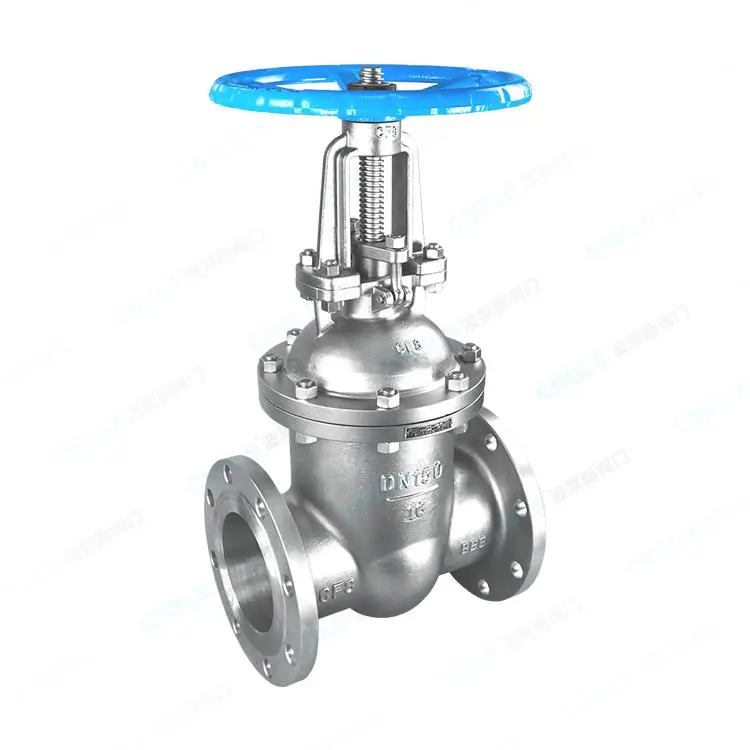
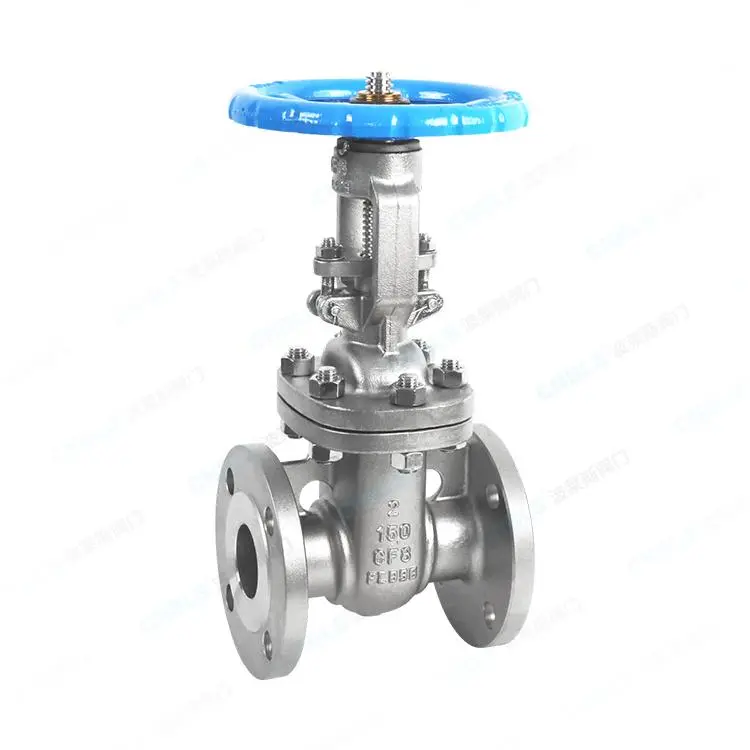
1. The code, unit, and classification rules are different.
1. **GB (PN System, Domestic/European Standards)**
Marked with **PN**, the numbers represent the normal temperature nominal pressure, with the unit based on bar/MPa. Common grades: PN6, PN10, PN16, PN25, PN40, PN63, PN100, etc.
Meaning in plain language: PN16 = At normal temperature of 20℃, the rated pressure is 1.6 MPa. The number directly corresponds to the rated pressure value.
2. **American Standard (Class pound rating, ASME system)**
Marked with **Class/CL/LB**, there is no direct correspondence with MPa. The original unit is psi (pounds per square inch), and the common grades are: Class150, 300, 600, 900, 1500, 2500.
Class 150 is not 1.5 MPa, and Class 300 is not 3 MPa. They cannot be converted directly based on the numbers.
II. Baseline Temperature and Design Logic (The Most Critical Difference)
1. ** GB PN**
The rated pressure only guarantees the pressure resistance at normal temperature. When the temperature rises, the allowable working pressure will linearly decrease. In high-temperature conditions, the margin is small.
Design concept: Centered on the "normal temperature condition", it is suitable for water supply and drainage, HVAC (heating, ventilation, and air conditioning), and ordinary pipelines at normal temperatures.
2. **American Standard Class**
High temperature as the design basis: The Class 150 standard uses a temperature of 260℃ as the pressure-bearing reference point, while for Class 300 and above, the pressure-bearing reference point is uniformly set at 454℃.
At normal temperature, the actual pressure-bearing capacity is much higher than the marked corresponding high-temperature pressure. Materials under high-temperature conditions have greater strength reserves, stronger anti-warping and high-temperature fluctuation resistance. For petroleum, steam, and high-temperature chemical pipelines, the US standard should be preferred.
For example: For carbon steel Class 150, at 20℃ it is allowed a pressure of approximately 2.0 MPa, while at 425℃ the pressure remains only at 1.0 MPa; and for PN16, at room temperature it is 1.6 MPa, and the pressure reduction at 300℃ is greater than that of the same grade Class.
III. The flange dimensions, sealing surfaces, and bolts are completely incompatible.
The outer diameters of the flanges, the number of bolt holes, the hole spacing, the height of the sealing face bosses, and the thickness of the flanges of the two systems constitute a separate set of standards. They **cannot be directly interchanged for installation**.
- GB PN16 flange and Class150 flange bolt holes do not match;
- GB PN40 flange can not match Class300 valve body, forced assembly will seal failure, stress deformation.
IV. Equivalence at Normal Temperature (This is for reference only and cannot be used as a substitute for actual application)
At normal temperature, the engineering approximation is applicable. However, at high temperatures, the selection must be upgraded.
-Class150 ≈ PN20, low pressure room temperature can temporarily replace PN16
-Class300 ≈ PN50, routinely matching the national standard PN40
- Class600 ≈ PN100
- Class900 ≈ PN150
V. The basis for pressure testing and standards is different
1. The national standard valve complies with GB/T 12224. The shell pressure test is 1.5 times the PN pressure, and the pressure test is conducted at normal temperature with clear water.
2. The American standard valves comply with ASME B16.34. The test pressure rules and pressure-temperature curves are separately specified according to the weight class. The temperature-pressure rated values for different materials (WCB/CF8) within the same weight class are further differentiated.
VI. Classification of Applicable Areas
1. ** GB PN**
Municipal water supply, central air conditioning, normal temperature fire protection, ordinary low-pressure chemical engineering, domestic civil infrastructure projects, have lower costs and highly versatile components.
2. **American Standard Class**
Import and export of petrochemicals, oil refining, high-temperature steam from power plants, heat transfer oil, with large temperature fluctuations and strict high-pressure process pipelines. The safety margin for high temperatures is even greater. Overseas projects are required to use it.
VII. Briefly Summarize the Key Distinctions
1. PN refers to the normal temperature pressure, while Class refers to the high-temperature pressure-bearing reserve.
2. The numbers cannot be directly converted into each other, and the flange sizes are not interchangeable.
3. For normal-temperature civil use and domestic ordinary pipelines, PN is selected; for high-temperature steam, foreign-related chemical industries, and high-pressure process pipelines, Class is selected.
4. When the temperature exceeds 200℃, under the same normal pressure conditions, the safety performance of the American standard pressure grade is superior to that of the Chinese standard PN.